

If you’ve ever spent a Saturday afternoon strolling down Main Street in Littleton, New Hampshire, you know exactly why this town is consistently voted one of the best small towns in America. From the world’s longest candy counter at Chutters to a crisp pint of Alexandr at Schilling Beer Co. overlooking the Ammonoosuc River, Littleton is the vibrant, beating heart of the North Country. It is a place where history feels alive in the brickwork, yet the energy of the 2026 "Silicon Lake" tech resurgence and a thriving arts scene keeps the town firmly rooted in the future.
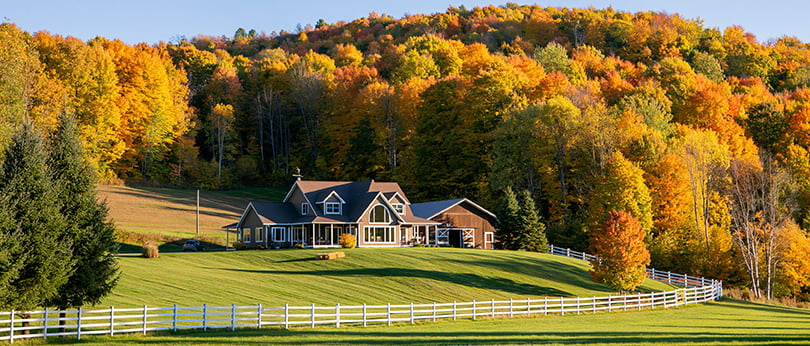
For many, a visit to Littleton is the spark that leads to a lifelong dream: owning a seasonal home in the White Mountains. As we navigate the fall of 2026, the real estate market in the 03561 zip code remains a fascinating landscape. While the frenetic bidding wars of the early 2020s have stabilized, Littleton’s median list price of about $365,000 remains a solid anchor for investors seeking a mountain sanctuary. Whether it’s a ski-in/ski-out condo near Bretton Woods, a quiet cabin tucked away near Moore Reservoir, or a multi-generational "camp" in the shadow of Franconia Notch, a second home here is an investment in your family's legacy.
However, at HPM Insurance, we know that insuring a seasonal home in Northern New Hampshire is a very different beast than insuring your primary residence in the southern part of the state. The North Country is breathtakingly beautiful, but it can be unforgiving. To protect your mountain retreat, you need to understand the unique risks—and the specific insurance requirements—that come with life at the gateway to the Whites.
Is it a Primary, Secondary, or a Seasonal Home?
In the insurance world, accuracy is your best friend. When you call HPM for a quote, one of the first things we’ll ask is how often you will use the property and whether it is seasonal or secondary.
The distinction between a primary, secondary, and seasonal home may seem like semantics, but it affects how the carrier calculates your premium. A primary home is your primary residence and is occupied regularly. A secondary home is typically a property you visit frequently throughout the year—perhaps every other weekend—and it usually stays fully functional with utilities running year-round.
A seasonal home, conversely, is winterized during the off-season, with water pipes drained and heat off.
The distinction matters because it shapes how insurance companies view one of the greatest threats to a North Country retreat: burst pipes. If a pipe bursts in your primary home, you usually find out within hours. If a pipe bursts in your Littleton ski condo on a Tuesday in January and you don't arrive until Friday night, you aren't just looking at a puddle; you’re looking at a catastrophic loss that could compromise the entire first floor.
The 2026 Tech Solution to North Country Risks
The good news for 2026 homeowners is that technology has caught up with some of the risk factors of remote ownership. At HPM Insurance, we are seeing more carriers offer "Smart Home" discounts for properties equipped with water-leak sensors and automatic shut-off valves. Devices like Phyn or Moen Flo can detect a pinhole leak and shut off the main water line before it turns into a $50,000 claim. In the North Country, where sub-zero nights are the norm, these devices aren't just gadgets—they are essential insurance tools.
Speaking of winter, the 2026 season has already reminded us that "weight of ice and snow" is a very real peril. Littleton’s famous snowfall can be heavy and wet, putting immense pressure on older roof structures and "camp" style outbuildings.
Keep up with snow load on your roof, especially for detached garages or sheds where you might be storing your snowmobiles or ATVs. Regular maintenance, like raking the roof after a heavy storm, is often a prerequisite for high-value secondary and seasonal carriers. If a roof collapses, that would likely be a big claim loss, leading to an otherwise avoidable claim.
The Short-Term Rental Reality in Littleton
With the 2026 Littleton economy booming and projects like the Cottage Street Sidewalk Connectivity Project bringing even more foot traffic to our downtown, the temptation to list your seasonal home on Airbnb or VRBO is high. Short-term rentals (STRs) are a fantastic way to offset a mortgage, but they are also an insurance minefield.
Most standard homeowners policies explicitly exclude "business activities." If a guest trips on your porch or a cooking fire starts while your home is rented, your insurance company could deny the claim.
To cover your seasonal or secondary home for short-term rentals, decide how many weeks you are willing to rent it out and tell your insurance agent so you and your carrier are on the same page. The carrier may allow up to a specific number of weeks for short-term rentals. If they don't, other carriers can. The key is to be transparent and accurate, because the consequences of inaccurate information can be severe if a claim occurs.
Logistics and the "Littleton Advantage"
One thing many out-of-town owners forget is the logistics of North Country repairs. Getting contractors and materials to your site may take longer than you expect. Littleton is a hub, but it is still in the mountains. If you have a claim, labor and specialized materials often cost more than in more urban areas because of travel and transport.
This is why "Replacement Cost" coverage is important. Many older seasonal properties in the Littleton area are insured as "Actual Cash Value", meaning they only pay the depreciated value of the structure. In a 2026 market where construction costs remain elevated, you want a policy that pays to rebuild your sanctuary to its original quality, using today’s labor and material rates.
Why Your HPM Littleton Team is Your Best Neighbor
When you work with HPM Insurance, you aren’t talking to a chatbot or a call center in a different time zone. You’re talking to people who shop at the Littleton Food Co-op, who know exactly where the Dells Pond drawdown is happening, and who understand the specific challenges of a driveway on a 15-degree incline during a March "mud season" thaw.
As an independent agency, we serve as your risk managers. We have access to carriers like Chubb, PURE, and Hanover for high-value estates, as well as specialized insurers for rustic cabins. We shop the market to find the best fit for your specific lifestyle, ensuring that when the stars come out over the Ammonoosuc, the only thing you have to worry about is whether you have enough wood for the fire.
Owning a piece of the North Country is a privilege and a joy. It’s where you go to unplug, hike the Presidential Range, and build a legacy for your children. Don’t let the stress of inadequate insurance follow you to your retreat. Whether you’re just starting your search for a Littleton home or you’ve been a tourist for decades, give us a call. We’ll handle the fine print so you can get back to what matters—enjoying everything that makes Littleton the best town in the North Country.
